
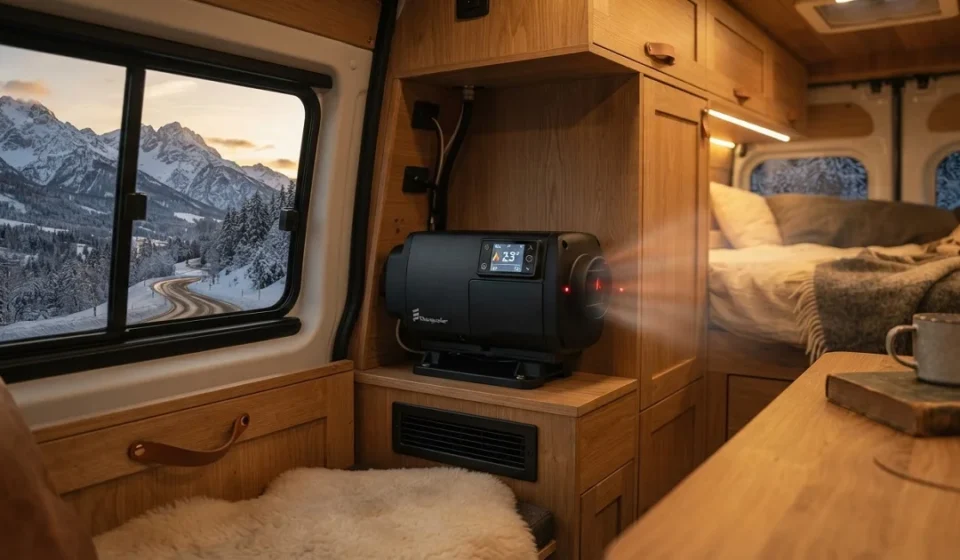
Diesel Heater Guide 2026: Best Picks, Setup & Safety
Do you huddle into a van, boat, cabin or workshop on cold nights? If so, you were probably listening to someone with experience rave about their very own diesel heater. If you’re country hopping where it’s cool, check out our travel guides for. You May Also Like. These heaters operate for hours on very little fuel. Plus, they don’t require a gas bottle, and pump out some serious heat even when it’s 0 degrees outside.
But a diesel heater is, like Likely also a combustion appliance and creates carbon monoxide. Thus, it is necessary to choose the correct and properly installed unit. This must be correct or you’ll have a warm dry night. Alternatively, if you get this wrong, it becomes life-threatening.
This guide covers how a diesel heater works, what to check before you buy one, how setup actually goes, and the safety rules that matter most. Overall, we built it from manufacturer guidance and installation documentation from heater makers and safety-focused equipment sites, including OSHA’s carbon monoxide guidance and installation notes from United Rentals.
Table of Contents
- What Is a Diesel Heater?
- How Does a Diesel Heater Work?
- Types of Diesel Heaters
- What to Check Before Buying a Diesel Heater
- Popular Diesel Heater Brands
- Quick Diesel Heater Comparison Table
- Diesel Heater Setup and Installation
- Diesel Heater Safety Rules You Shouldn’t Skip
- Diesel Heater Running Costs and Maintenance
- Diesel Heater vs. Propane Heater
- FAQs
- Conclusion
What Is a Diesel Heater
A diesel heater works by burning diesel fuel to produce heat, and a fan blows that heat into a room, vehicle or cabin somewhere inside. It doesn’t burn fuel to create motion like a car engine. Instead, it uses a tiny amount (metered) of diesel just to heat the air – or water in some systems – near you.
These types of heaters effectively sit inside campers, RVs, boats, horse trailers workshops and off-grid cabins. In those areas mains gas does not exist, and a large electric heater will completely empty a battery bank in no time. Hence a diesel heater is actually the efficient one.
Two European brands, Webasto and Eberspächer, generally get credit for popularizing diesel heaters in vehicles, and both still make widely used units today. Since then, more brands, including budget-friendly names like Vevor, have entered the market at a range of price points.
How Does a Diesel Heater Work
The majority of diesel heaters for cars or small areas are indirect-fired, which means you are not burning fuel in the same airspace. Here’s the basic sequence:
- First, a small fuel pump draws diesel from a tank (often a dedicated small tank) and meters it into the combustion chamber.
- Next, the fuel ignites, and the heat then passes through a heat exchanger, a metal surface like a coil or plate.
- Meanwhile, a fan pulls in cool air from the room or cabin and blows that air across the hot heat exchanger, warming it without letting it touch the flame or exhaust gases directly.
- After that, the heater pushes the now-warm, clean air into your space through ducting.
- Finally, a separate flue vents the exhaust, including carbon monoxide, outside.
That divider where the “clean air” everything and “exhaust” everything gets split also drives all of the safety concept behind these heaters. In contrast, a rarer direct—fired design blows air directly through the flame so that warm air brings combustion products along with it. Due to that manufacturers designed these units for outdoors or large well ventilated areas only and you should never run one in a closed cabin.
Types of Diesel Heaters
Diesel Air Heaters
A diesel air heater warms air directly, and it’s the most common choice for vans, RVs, and cabins. These units heat up fast, and overall, you can install them fairly simply.
Diesel Water Heaters (Hydronic)
A hydronic diesel heater will also heat coolant or water which is then circulated through radiators under the floor of your vehicle. It’s slower to heat up but can also provide hot water, which is why many people choose them for fixed installs like off-grid cabins or boats.
Portable Diesel Heaters
You’ll often see a portable diesel heater on construction sites and in garages. That said, manufacturers agree on one point here: don’t run a portable diesel heater inside an occupied living space. Instead, if people are nearby, keep the unit outside and duct only the warm air indoors.
Diesel Parking Heaters
A diesel parking heater mounts inside a vehicle and runs off the vehicle’s own fuel tank and battery. Drivers in Europe often call these “night heaters,” and they warm a truck cab or car interior without idling the engine.
What to Check Before Buying a Diesel Heater
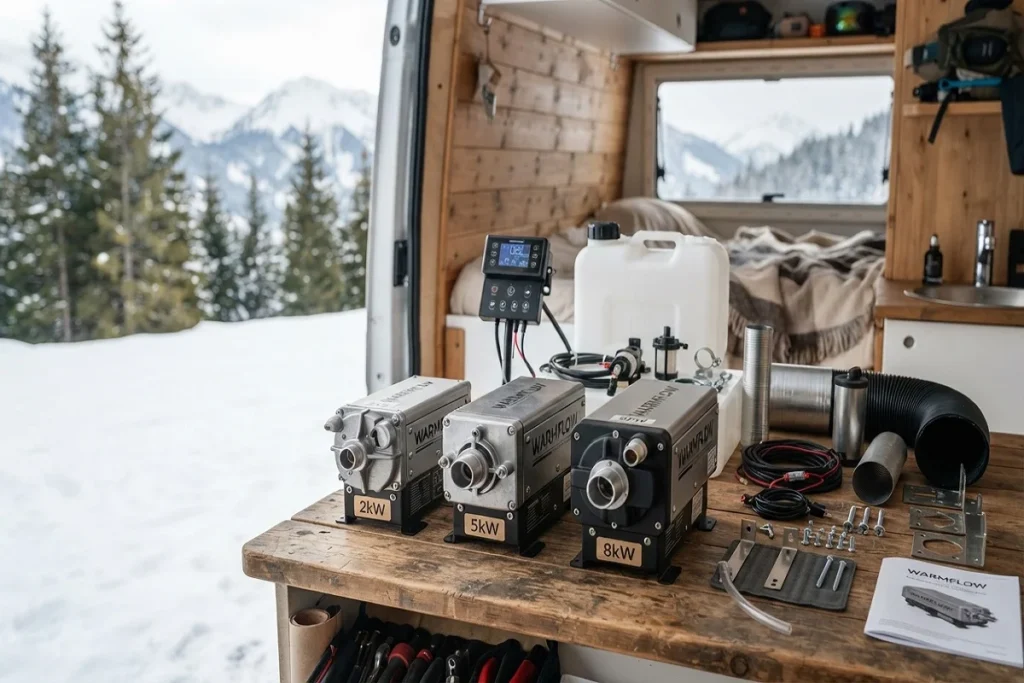
Heat output (kW). Most brands offer diesel air heaters at 2kW, 5kW and/or greater than 8kW. Essentially, you are based on a guideline value where a 5kW device is fit for more modest encased spaces (like the inside of your van or a solitary room) while we suggest significantly higher yields for bigger lodges or multi-room arrangements. On the flip side, however, too big is not better — an oversized heater in a smaller area would be inefficient with fuel and noisy.
Altitude and insulation. Combustion efficiency drops at higher altitudes, and similarly, a poorly insulated space needs more heat output to stay warm. Therefore, factor in where you’ll actually use the heater.
Fuel tank size and placement. Check whether the heater needs its own dedicated tank or can run off your existing fuel supply, and also consider how much space that setup needs.
Noise level. Fan and combustion noise varies a lot between brands, so this matters especially if the heater will run overnight near where you sleep.
Safety features. Look for automatic shut-off and overheat protection. In other words, choose a heater with a strong track record for stable combustion, not just the cheapest option you can find.
Ease of installation. Some kits include everything you need — exhaust pipe, muffler, wiring, and fuel line — while others require you to source these parts separately.
Warranty and support. This is fundamentally a fuel-burning appliance that will run unattended for hours, and therefore it matters much more here than most camping gear, whether you have an honest manufacturer or professional installer backing up the product.
Popular Diesel Heater Brands
End to end, if you work on data of the newer model allotation teams, three names pop up over and over again. An example of this might be if you see a Webasto diesel heater being referred to as a premium tried and tested choice, as the brand was one of the early pioneers of this technology for vehicles. Also similar is Eberspächer’s equally high regard for reliability in RVs and boats.
The Royal a nice budget choice on the cheaper end for vanning, garages and workshops would be this Vevor diesel heater. Like any budget alternative, be sure to check reviews around combustion stability and after-sales service before purchase. Alternatively, if you’re in particular need of a garage diesel heater make sure you choose a portable or wall-mounted unit that’s rated to the square footage of your space and well-vented exhaust by way of ways outdoor.
Quick Diesel Heater Comparison Table
| Factor | Diesel Air Heater | Diesel Hydronic (Water) Heater | Portable Diesel Heater |
|---|---|---|---|
| Best for | Vans, RVs, small cabins | Boats, off-grid cabins, multi-room heating | Construction sites, garages, outdoor use |
| Heats | Air directly | Water/coolant, then radiators | Air directly |
| Hot water option | No | Yes, in many systems | No |
| Warm-up speed | Fast | Slower | Fast |
| Typical installation | Ducted, fixed | Plumbed, fixed | Freestanding; exhaust must vent outside, or unit stays outdoors |
| Indoor use | Yes, with proper venting | Yes, with proper venting | Not recommended indoors |
Diesel Heater Setup and Installation
Installing a diesel heater takes more than mounting a box and running a pipe outside. Below are the core components in a typical van or cabin install.
Mounting the Diesel Heater Unit
First, mount the heater on a hard, level, non-combustible surface, and follow the manufacturer’s clearance guidelines around flammable materials.
Running the Diesel Heater Fuel Line
Next, run the fuel line from the tank to the heater carefully. Rushed fuel line work causes many of the leaks you’ll read about in safety warnings, so take your time here.
Venting the Diesel Heater Exhaust
After that, route the exhaust pipe and muffler so every component stays outside the living space. Also, position the outlet where fumes can’t get drawn back in through windows, vents, or doors.
Adding a Fresh Air Intake
In addition, give the heater a fresh air intake, so it can burn cleanly instead of pulling combustion air from inside the cabin.
Wiring the Diesel Heater Controls
Then, wire the heater to a power source, typically a 12V leisure battery in vehicles, and add a thermostat or digital controller for easier operation.
Ducting the Warm Air
Finally, if you mount the heater in a separate compartment, run ducting to carry warm air into the room you’re heating.
Before getting started, a few quick notes: The installation manual from the manufacturer should be followed word for word; since clearance distances, routing of the exhaust and specs for fuel lines vary by brand. One more thing: you might not want to try this if you’re not experienced with fuel lines or exhaust systems, so get a pro in to inspect your handiwork where necessary—this is no time for improvisation. Test it with good ventilation before trusting the system overnight. Finally, diesel should be stored in an approved container that is located away from the heater you are using and any other heat sources.
Diesel Heater Safety Rules You Shouldn’t Skip
Manufacturers and equipment rental companies consider a diesel heater safe when you install and maintain it correctly. However, these are combustion appliances, and the risks become real fast if you take shortcuts.
Carbon Monoxide Is the Main Diesel Heater Risk
It is an odorless, colorless gas from burning diesel. This exhaust goes completely outside the living space through a dedicated flue in a properly vented indirect-fired heater. Having said that, issues arise if the exhaust is blocked, faulty, unhooked or never rightly vented outside in the first place.
Install a Carbon Monoxide Detector With Your Diesel Heater — No Exceptions
Every source on diesel heater safety agrees on this point: install a CO alarm anywhere you run a diesel heater, cooker, or hot water system. Not only is it cheap, but it’s also your single most effective early-warning tool.
Never Run an Outdoor-Only Diesel Heater Indoors
Manufacturers don’t design a portable, direct-fired diesel heater for occupied enclosed spaces. If a unit pushes warm air directly through the flame instead of through a sealed heat exchanger, keep it outside, and duct only the warm air into the room.
Check the Diesel Heater Exhaust Route Regularly
Snow, debris, or physical damage can block an exterior vent outlet. Consequently, a blocked exhaust is one of the most common ways CO ends up back inside a vehicle or cabin.
Keep Flammable Materials Away From the Diesel Heater
Fuel leaks and overheating cause most of the fire risk with these units, so follow the clearance distances in your owner’s manual or on the heater’s data plate.
Know the Diesel Heater Warning Signs
Watch for headaches, dizziness, and nausea, since these are early symptoms of CO exposure. If you smell fuel, see smoke, or suspect a problem, shut the heater off immediately and ventilate the space right away.
Maintain the Diesel Heater Regularly
Inspect the fuel line, exhaust, and combustion chamber routinely. Doing so catches small issues, like a loose connection or early wear, before they turn into safety problems.
Diesel Heater Running Costs and Maintenance
Generally, a diesel heater costs less to run than a large electric heater on an inverter. It also draws very little electrical power once running, mostly just enough to keep the fan and fuel pump going. Because of this low electrical draw, people relying on solar power or a leisure battery often favor a diesel heater over other options.
The reality is it has more to do with keeping your fuel system free of dirt and debris, cleaning the exhaust and making sure your intake isn’t clogged. Check out our lifestyle section for more off-grid living tips. Also, get the unit serviced from time to time too; especially if you push it hard through an entire winter. Overall, a good quality unit from a reputable manufacturer will provide years of regular use, but the actual lifetime is dependent on build quality, usage and whether or not you service it diligently.
Diesel Heater vs. Propane Heater
Both options work well for heating vans, RVs, and cabins, so the right choice depends on your setup.
Fuel availability: You’ll find diesel at almost any fuel station, which is convenient if you already carry diesel for a vehicle. By comparison, propane needs refillable bottles, which can be harder to find in some areas.
Electrical draw: A diesel heater typically uses less battery power once running than many propane furnace blower systems. As a result, this matters for off-grid setups.
Venting: Both diesel and propane heaters need proper venting to avoid CO buildup. In other words, this isn’t a diesel-only concern, and propane appliances need the same CO detector.
Upfront cost: A diesel heater and its installation often cost more upfront; however, many owners find the running costs balance that out over time, especially with heavy use.
Either way, neither option removes your need for a CO detector and correct venting. This rule applies to any fuel-burning heater, whether diesel or propane.
FAQs
Is it safe to run a diesel heater inside a van or cabin overnight? Yes, as long as you install a proper indirect-fired unit with the exhaust fully vented outside the living space, and you add a working carbon monoxide detector. However, it’s not safe with a portable, direct-fired unit built for outdoor use only.
How much heat output do I need from a diesel heater? It depends on your space’s size and insulation. Generally, manufacturers size smaller 2–5kW units for vans and single rooms, and larger outputs for bigger or poorly insulated spaces. Because of this variation, check your specific manufacturer’s sizing guidance instead of guessing.
Does a diesel heater need a separate fuel tank? Many vehicle installations use a small dedicated tank instead of tapping the main vehicle fuel tank, though some setups draw from the main tank. Since this depends on your heater model and installation choice, check your specific kit’s requirements.
Can I install a diesel heater myself? Many people do. That said, you need to follow the manufacturer’s manual precisely for the fuel line, exhaust routing, and electrical work. If you’re not confident with any of these steps, ask an experienced installer to check the work, or do it for you instead.
Even in normal operation, does a diesel heater put out carbon monoxide? Yes. No matter how well you tune your heater, there will always be some CO generated from the diesel combustion. Nevertheless, direct installation paths that CO away from the exhaust system; this is why accurate venting and a CO detector are salvageable measures, not discretionary.
Conclusion
In general, diesel heater enables you to live comfortably in van life, boating or off-grid living during the cold weather. Find more this guides on the NexifyBlog. They operate efficiently, don’ t sap your power reserve and generate genuine warmth even in the dead of winter. Still, they are combustion appliances first so the safety essentials aren’t optional: install the unit correctly, vent that exhaust completely outside the living space (through walls or roofs) and put a functioning CO detector in. Get these right, follow your manufacturer’s installation instructions, and ultimately a diesel heater will leave you warm through the darkest depths of winter.